Bulova Accutron Direct Read
- Regular price
- $2,950
- Regular price
- Sale price
- $2,950
- Unit price
- per
 Inquire about this item
Why We Love it
–
Why We Love it
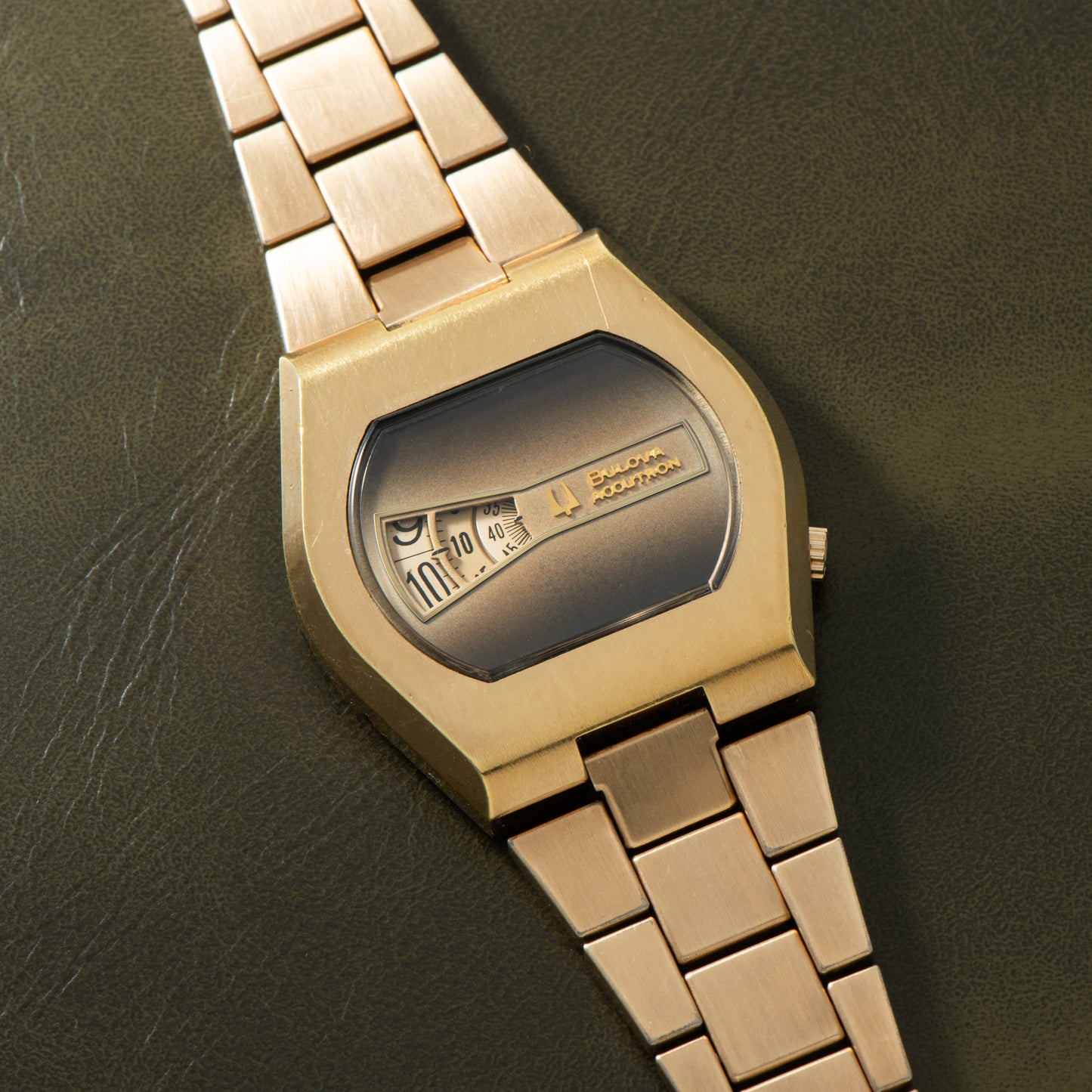
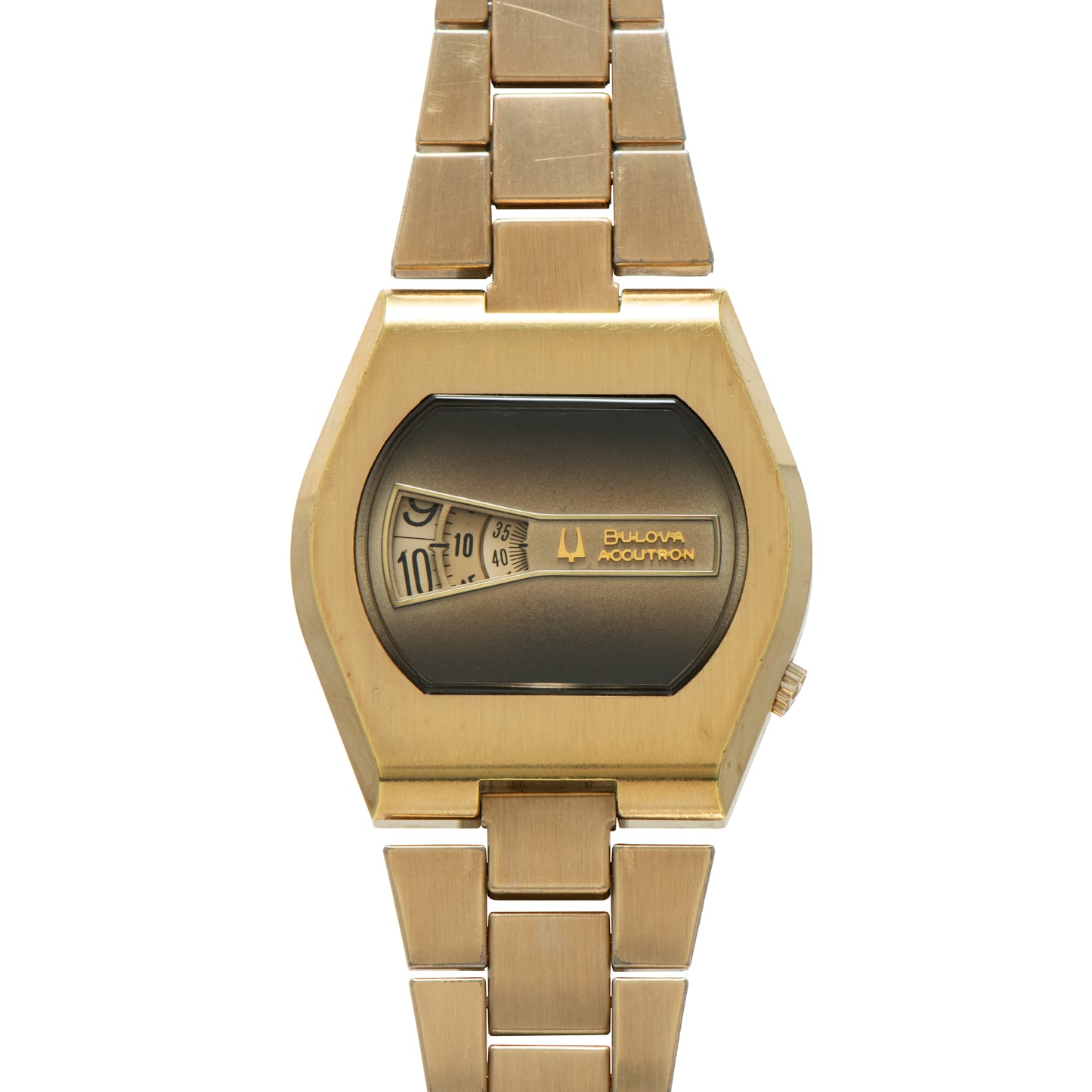
–The 1970s imagined the future differently. It wasn’t round dials and sweeping hands—it was digital displays, integrated bracelets, and bold geometric cases that looked as though they had arrived from tomorrow. Long before LED and LCD watches took over, Bulova pioneered its own vision of the digital age with the remarkable Accutron Direct Read.
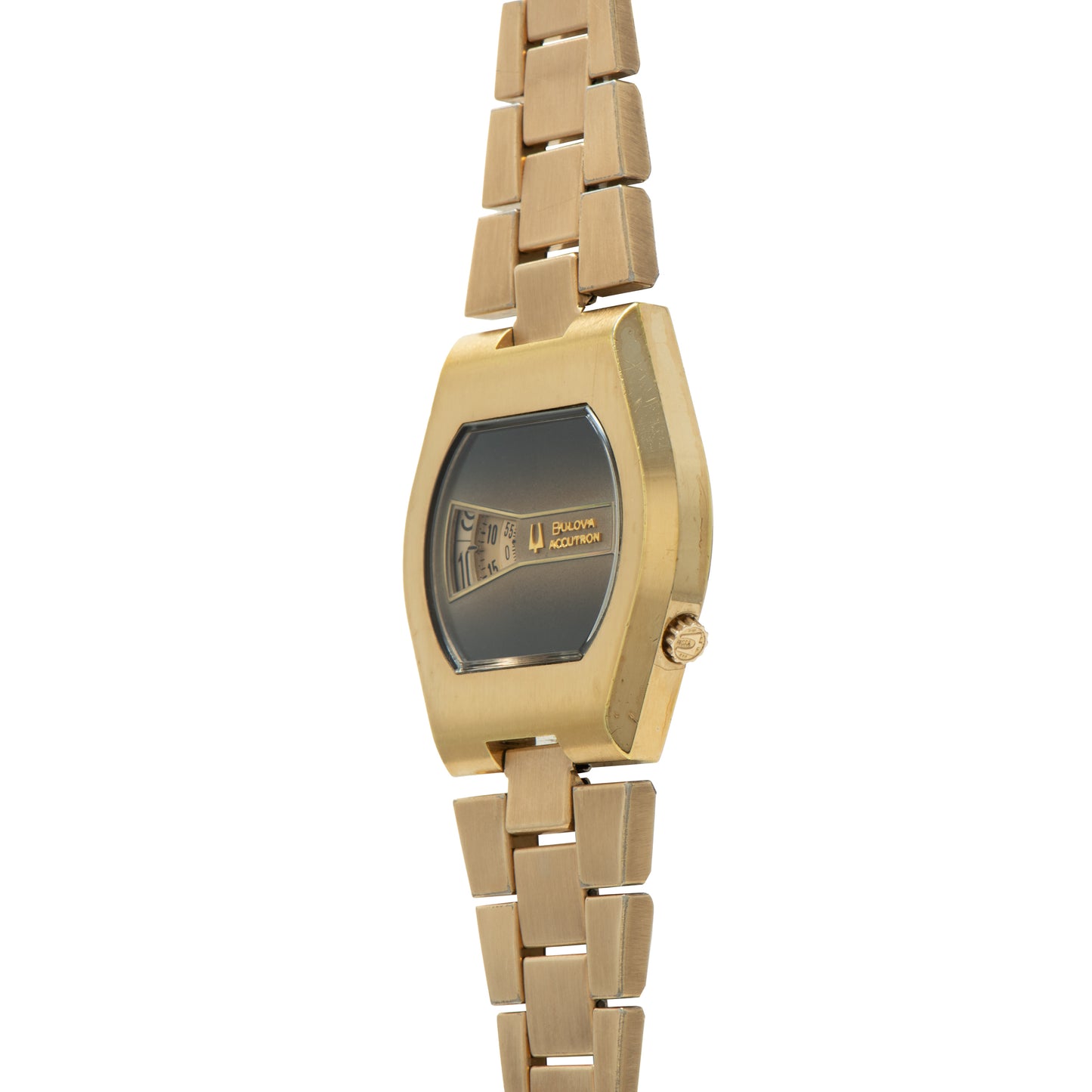
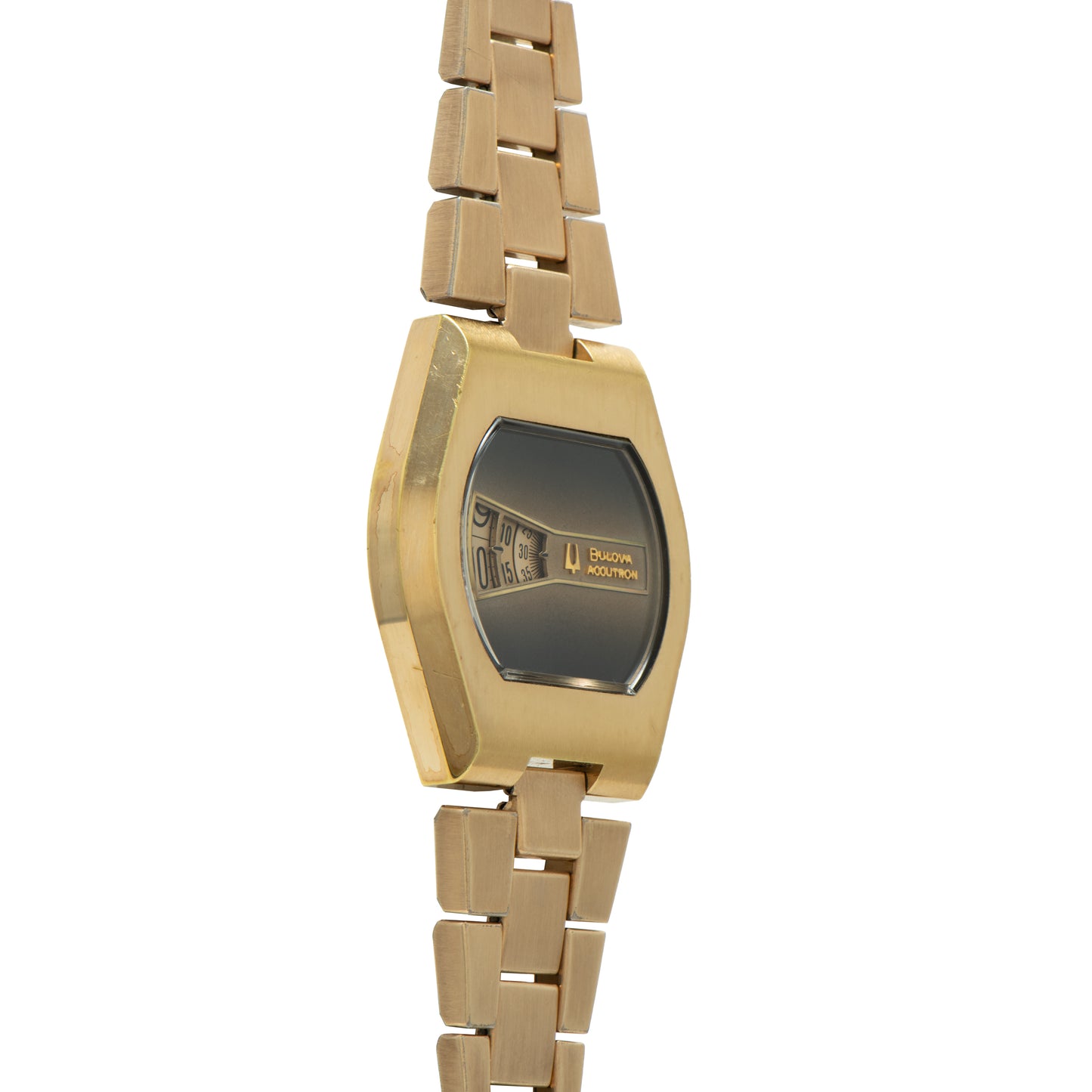
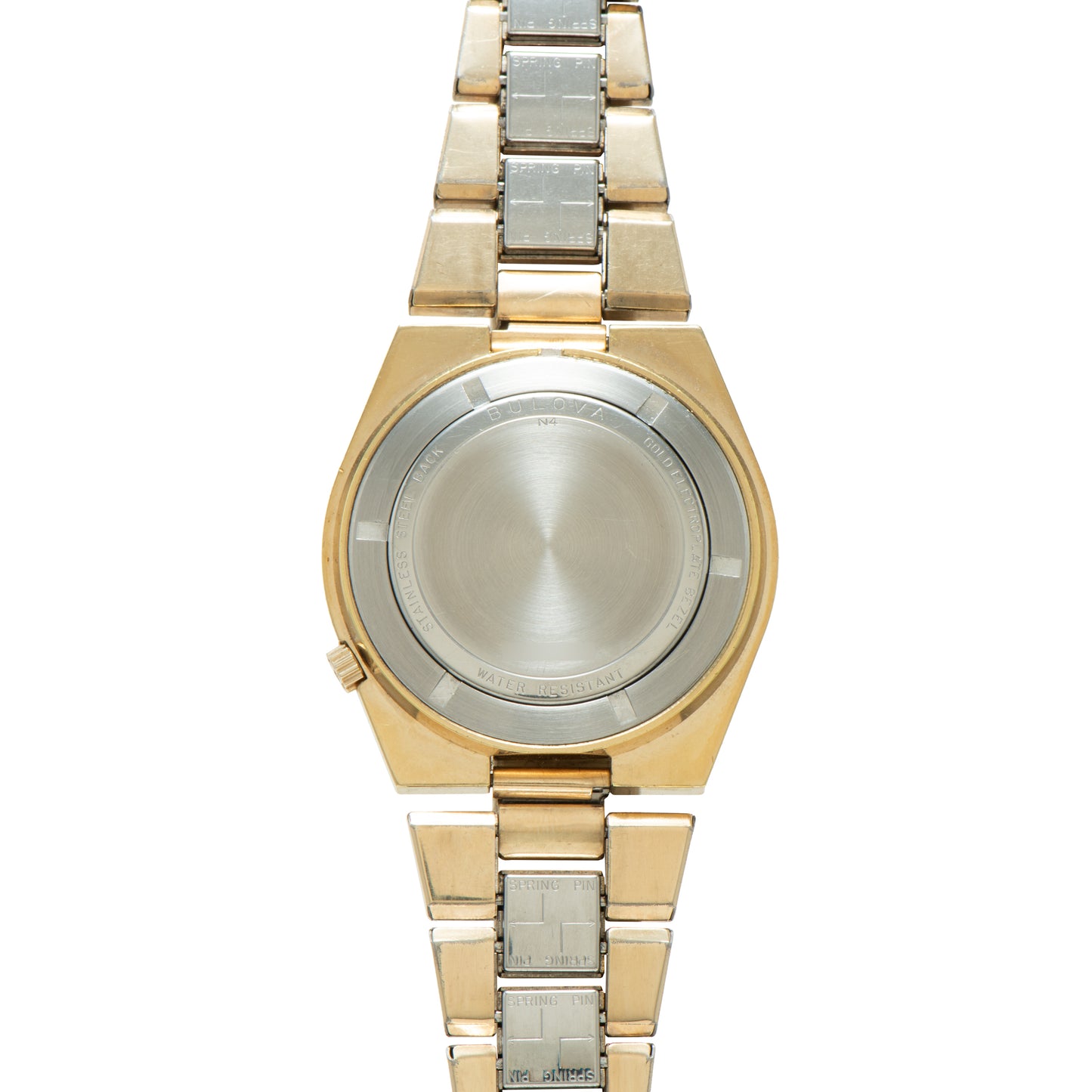
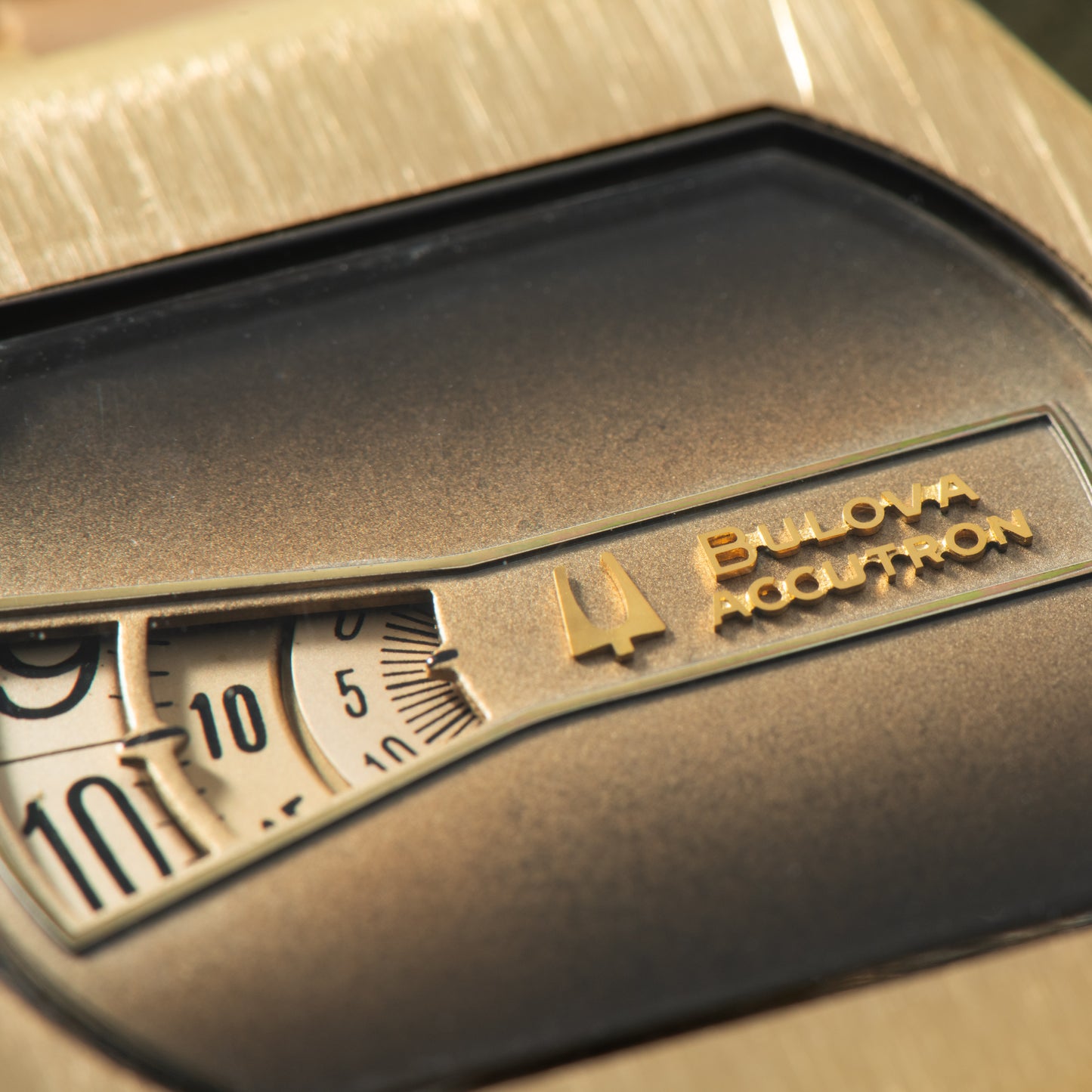
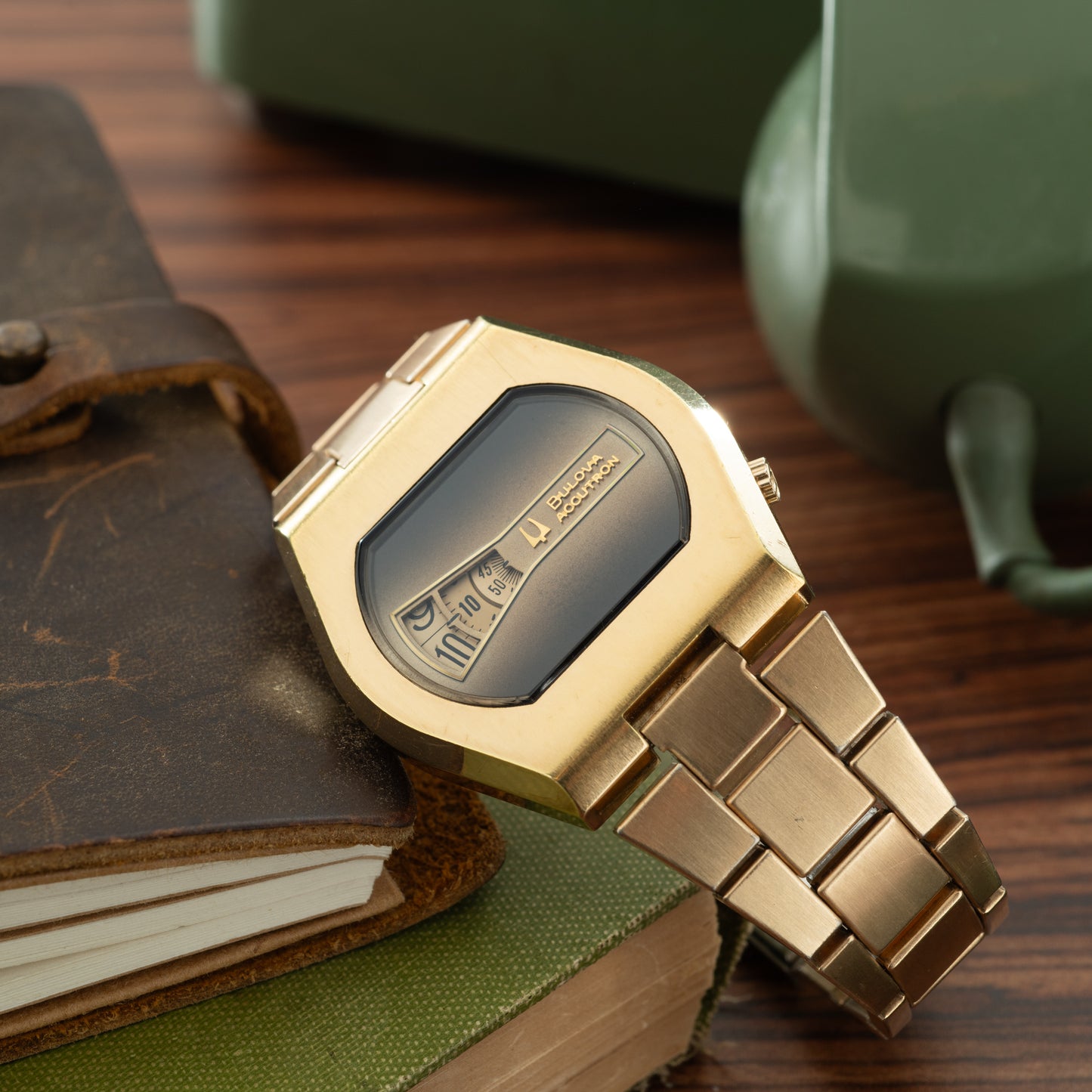
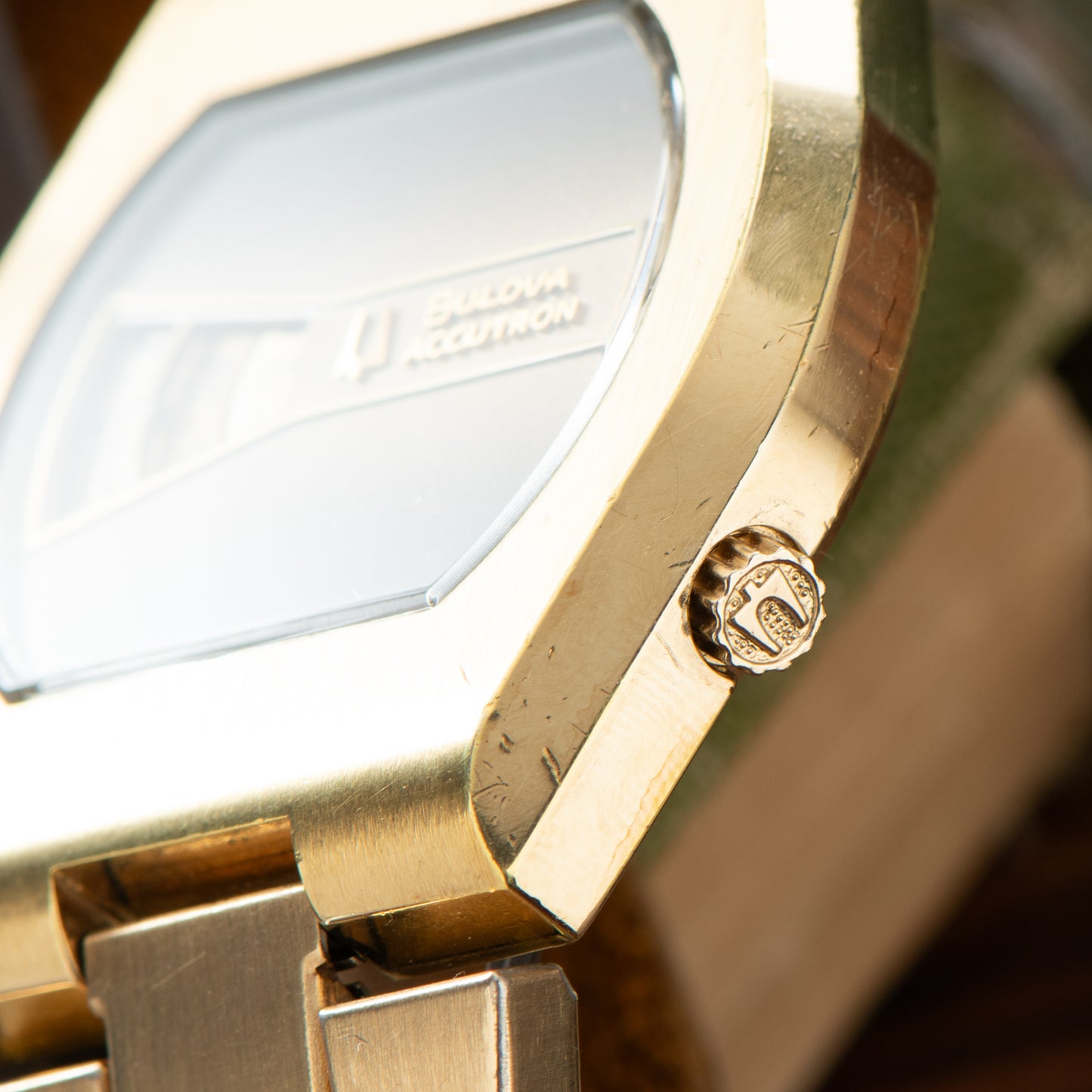
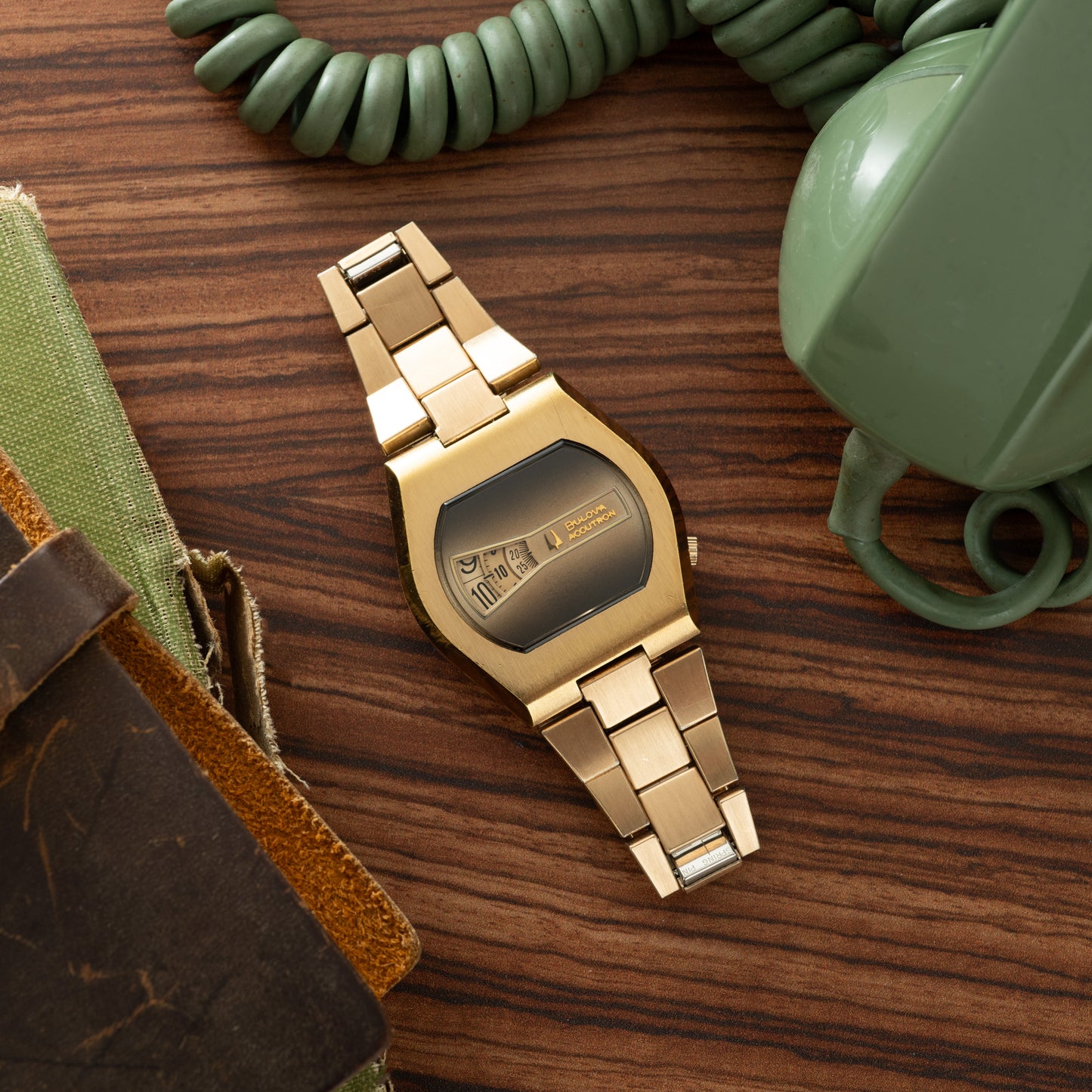
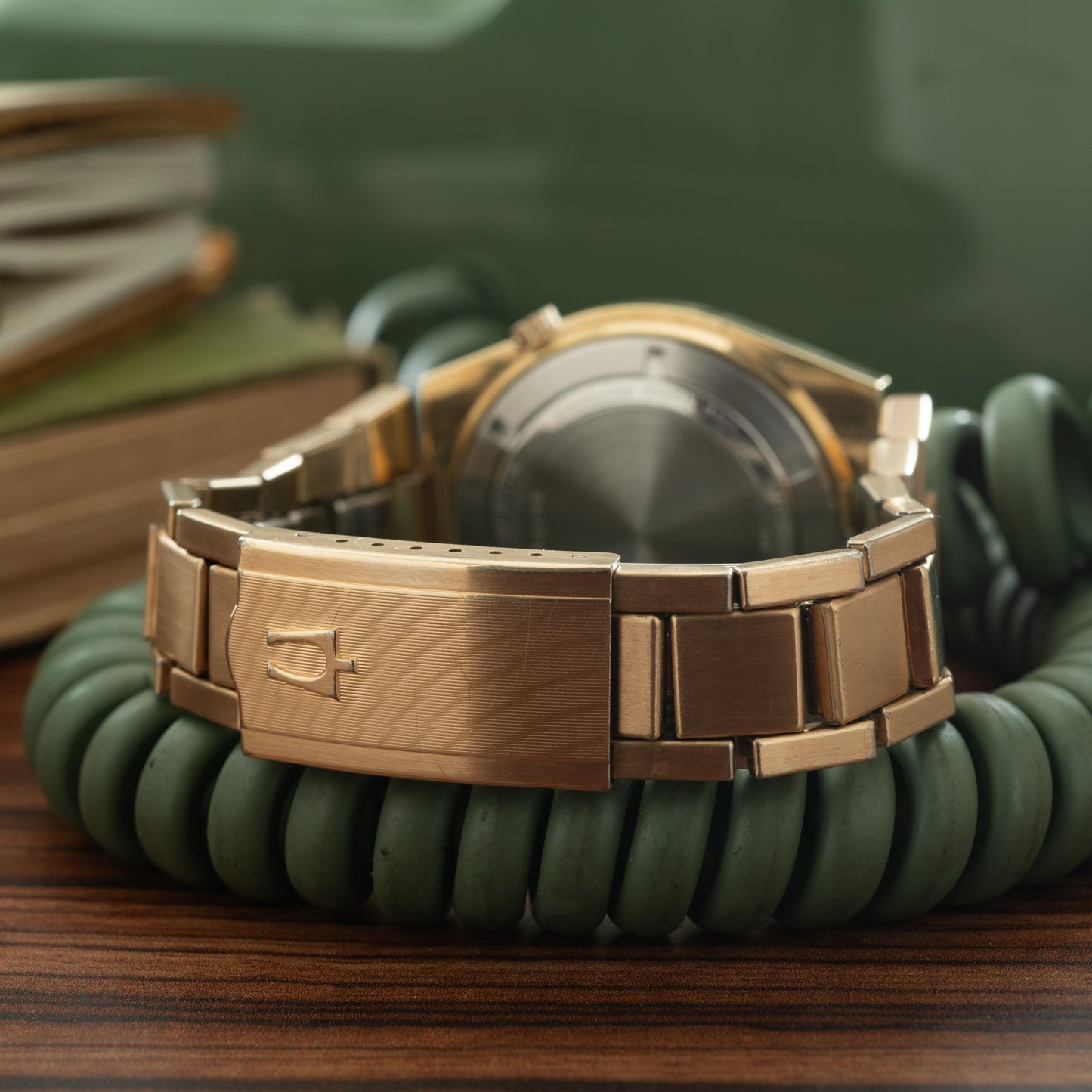
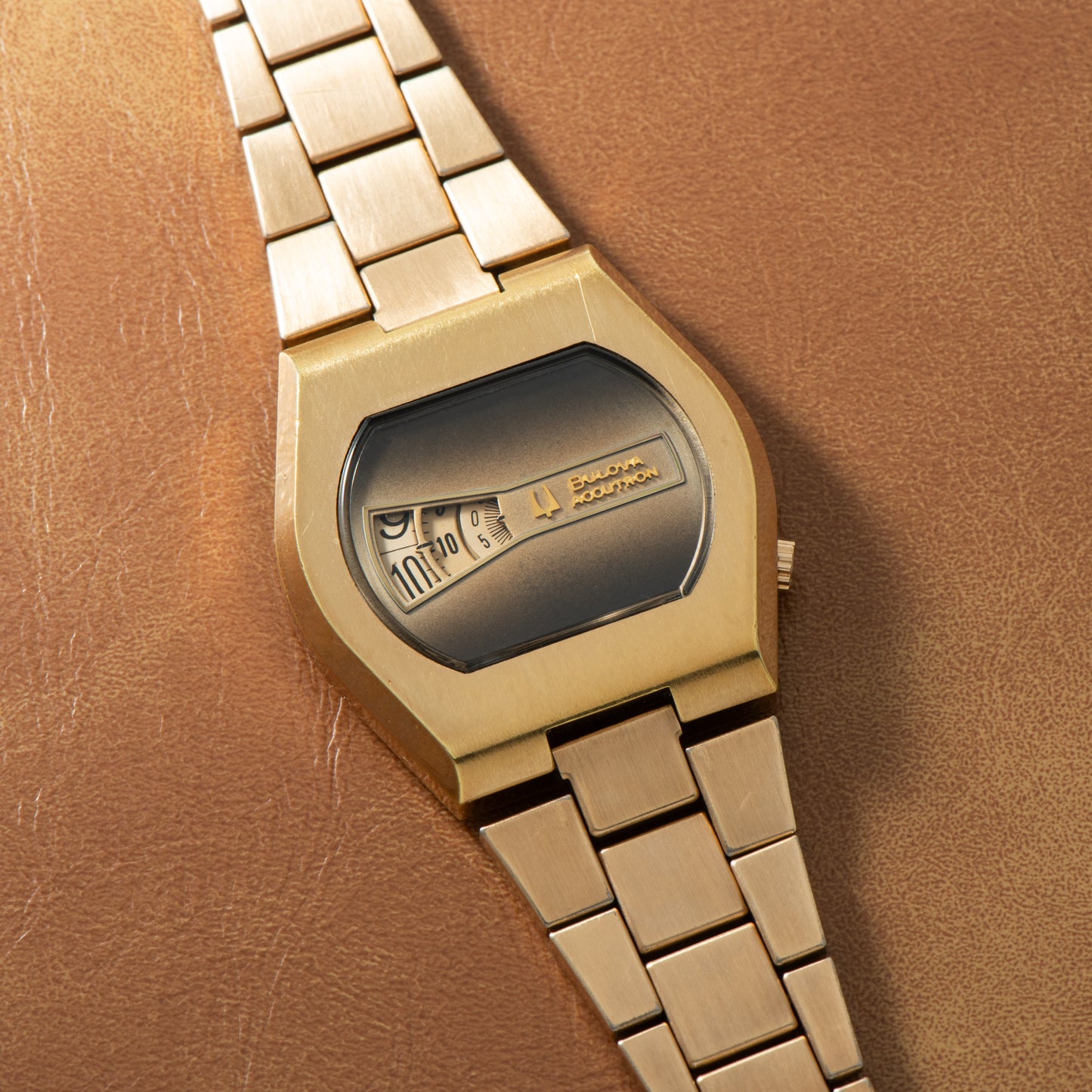
Produced in 1973, as confirmed by its N3 date code, this striking example features a commanding 42mm gold-plated case with an integrated bracelet and signed deployant clasp. Rather than a conventional dial, the watch displays the time through a horizontal viewing aperture. Hours jump instantaneously while minutes and seconds advance via rotating numbered discs, creating the illusion of a digital display despite being entirely mechanical. The result is one of the most distinctive and conversation-starting time displays of the decade.
Powering the watch is Bulova’s ingenious Caliber 2186 Accutron movement, an evolution of the company’s legendary tuning-fork technology. Instead of traditional hands, the movement drives a series of rotating discs that reveal the hours, minutes, and seconds through carefully shaped windows. The system combines the smooth precision of the Accutron with a display unlike anything else on the market at the time, earning the model the nickname of a “Driver’s Watch” thanks to its easily readable, in-line display.
The Direct Read perfectly captures an era when watchmakers weren’t afraid to challenge convention. While brands like Hamilton experimented with LEDs and Girard-Perregaux explored quartz, Bulova charted its own path by marrying its revolutionary Accutron technology with one of the most imaginative displays ever fitted to a wristwatch. Today, the Direct Read remains a cult favorite among collectors—not only for its unmistakably futuristic styling, but because it represents one of the last great innovations of the mechanical-electronic age before quartz forever changed the industry.
Brand Story
+
Brand Story
+As the decades wore on, however, the limitations of the traditional oscillating balance wheel — both with respect to accuracy and robustness — were becoming apparent. Electric watches from the likes of Hamilton and Lip experimented with a moving coil motor in place of a mainspring, but their reliance on conventional balance wheels meant they were little more accurate than their entirely mechanical counterparts. A Swiss engineer at Bulova named Max Hetzel would soon change all that.
A born tinkerer and a brilliant mind, Hetzel adopted an old clock design from the 19th century — incidentally invented by the grandson of Abraham-Louis Breguet — that used a tuning fork as its oscillator. Powered by a dry-cell battery and driven by an electromagnetic coil, its frequency of 360 Hz ensured a highly accurate system that powered a sweep hand around the dial. Significantly more accurate than a mechanical design, it was patented in 1953, and after some years of work, the Bulova Accutron debuted to the public in 1960.
The watch was a revelation — literally. A 1961 model with a transparent dial meant to show authorized dealers its inner workings became so popular that Bulova put it into regular production, calling it the Spaceview. Meanwhile, the audible 360-Hz hum produced by the movement was a novel selling point, featuring in period advertisements in which a man was seen holding the watch up to his ear.
When the U.S. government sought to replace the U-2 spy plane with an aircraft that could outmaneuver anti-aircraft systems, Lockheed Martin’s secretive Skunkworks division offered the perfect solution in the form of the sleek A-12, which could reach speeds of Mach III (~2,310 mph). Bulova Accutron wristwatches accompanied the pilots of this advanced piece of engineering, as they did on the wrists of public-facing X-15 flights, which reached speeds of 4,500 mph. The Accutron was even worn by astronauts during the Mercury Seven program during training; in 1963 during Project Mercury; and in Project Gemini missions up until 1983, long after the tuning fork technology had been replaced by more contemporary quartz-powered tech.
In 2020, Accutron was spun off by parent company Bulova — owned by the Citizen Group of Japan — into its own brand, where it continues to produce modern versions of one of the world’s downright coolest watches.
A:S Guarantee
+
A:S Guarantee
+Our Pledge
Analog:Shift stands behind the authenticity of our products in perpetuity.
Condition
Since our pieces are vintage or pre-owned, please expect wear & patina from usage and age. Please read each item description and examine all product images.
Warranty
We back each Analog:Shift vintage timepiece with a two-year mechanical warranty from the date of purchase.
International Buyers
Please contact us prior to purchase for additional details on shipping and payment options.
Shipping & Returns
+
Shipping & Returns
+All of our watches include complementary insured shipping within the 50 states.
Most of our products are on hand and will ship directly from our headquarters in New York City. In some cases, watches will be shipped directly from one of our authorized partners.
We generally ship our products via FedEx, fully insured, within 5 business days of purchase. An adult signature is required for receipt of all packages for insurance purposes. Expedited shipping is available at an additional cost. We are also happy to hand deliver your purchase in Manhattan or you may pick it up at our showroom.
Returns must be sent overnight or by priority international delivery, fully insured and paid for by the customer. A restocking fee may apply. Watches must be returned in the same condition as initially shipped.
We welcome international buyers, please contact us prior to purchase for additional details on shipping and payment options.

Bulova Accutron Direct Read
- Regular price
- $2,950
- Regular price
- Sale price
- $2,950
- Unit price
- per